
Location : Kenya
Date : 2026-11-16 09:00:00
Organized by International Crops Research Institute for the Semi-Arid Tropics (ICRISAT) under the aegis of CGIAR CapSha Accelerator and Breeding for Tomorrow (B4T) Science Program
Introduction
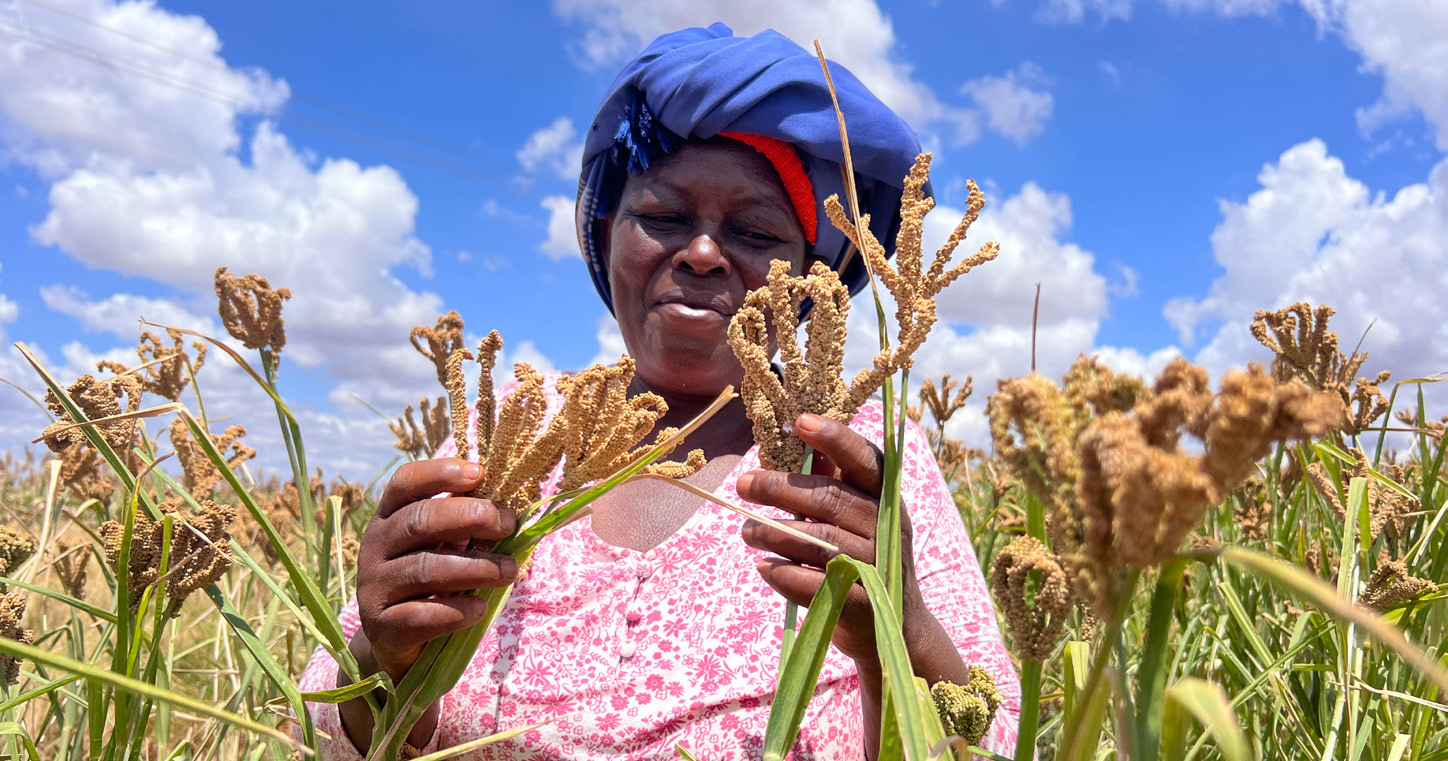
Millets (pearl millet, finger millet and small millets) are climate-smart, nutrient-rich cereals that are uniquely adapted to dryland environments, making them essential for sustainable agriculture, food security, and improved nutrition in Africa and Southeast Asia. In Kenya, where nearly 80% of the land is classified as arid and semi-arid, recurrent droughts and climate change continue to threaten agricultural productivity. Developing high-yielding, climate-resilient, and nutrient-rich millet varieties through modern breeding technologies offers a sustainable pathway to combating malnutrition, enhancing livelihoods, and building resilient agrifood systems. Recent advances in millets crop improvement technologies, including high-throughput phenotyping, genomics, molecular breeding, and predictive breeding, are transforming breeding programs and significantly increasing their genetic gains. Integrating these modern approaches with conventional breeding enables breeders to develop improved cultivars more efficiently while addressing evolving production constraints.
About the course
This international training program is designed to strengthen the capacity of African plant breeders, geneticists, researchers, and early-career scientists working on finger millet, pearl millet, and small millet crops. Participants will gain practical knowledge and hands-on experience in modern breeding strategies, genomic tools, and breeding data management used in contemporary millet improvement programs. The course combines classroom lectures, laboratory practicals, field demonstrations, computational exercises, and interactive discussions delivered by ICAR (Indian Council of Agricultural Research) and internationally recognized scientists from ICRISAT and partner institutions. Participants will also have opportunities to exchange experiences, discuss breeding challenges, and develop collaborative strategies for strengthening millets improvement programs across Eastern Southern Africa (ESA) countries.
Objectives of the course
The program is designed for:
Duration of the course and location
Nov 16-22nd 2026 (5-7 days as per training need assessment)
Location: ICRISAT Office/Kiboko Research Station, Kenya
Expected Outcomes
Approach of the training:
The course combines theory, hands-on practicals and field immersion to provide comprehensive training in modern millet breeding. Participants will receive practical training in germplasm evaluation, crossing techniques, precision phenotyping, speed breeding, genomics-assisted breeding, breeding informatics, and decision-support tools, complemented by field visits, laboratory demonstrations, and peer-to-peer knowledge exchange. The approach is designed to strengthen technical competencies while promoting innovation, collaboration, and application of advanced breeding technologies across African breeding programs.
Application:
Prospective applicants from Kenya, Tanzania, Uganda, Ethiopia, and Zimbabwe are eligible to apply for the course at the link given below. Deadline to apply for the training course:
20 October 2026
https://forms.gle/9GM4HAjBrdz4nHqbA
Outlines of the course:
(Themes covered during the course)
Training Materials
Coordinators
SK Gupta
Principal Scientist (Pearl Millet Breeding)
Accelerated Crop Improvement
ICRISAT, Hyderabad, India
shashikumar.gupta@icrisat.org
Dr Kumaracharyulu Deevi
Senior Scientist
Transforming Agri-food Systems
ICRISAT Focal Point for CapSha Accelerator
ICRISAT, Hyderabad, India
kumaracharyulu.deevi@icrisat.org
Co-Coordinators
Henry Ojulong
Senior Scientist
Accelerated Crop Improvement
ICRISAT, Nairobi, Kenya
henry.ojulong@icrisat.org
Sobhan Babu Sajja
Senior Scientist
Accelerated Crop Improvement
ICRISAT, Hyderabad, India
sobhan.sajja@icrisat.org
Contact
Dr Padmaja Ravula
Theme Leader – Dryland Academy
Cluster Leader – Gender Equality and Youth Inclusion
Global Research Program – Transforming Agrifood Systems
ICRISAT, Hyderabad, India. padmaja.ravula@icrisat.org