
Location : Nigeria
Date : 2026-10-12 09:00:00
Organized by International Crops Research Institute for the Semi-Arid Tropics (ICRISAT) under the aegis of CGIAR CapSha Accelerator and Multi-Functional Landscape (MFL) Science Program
About the course:
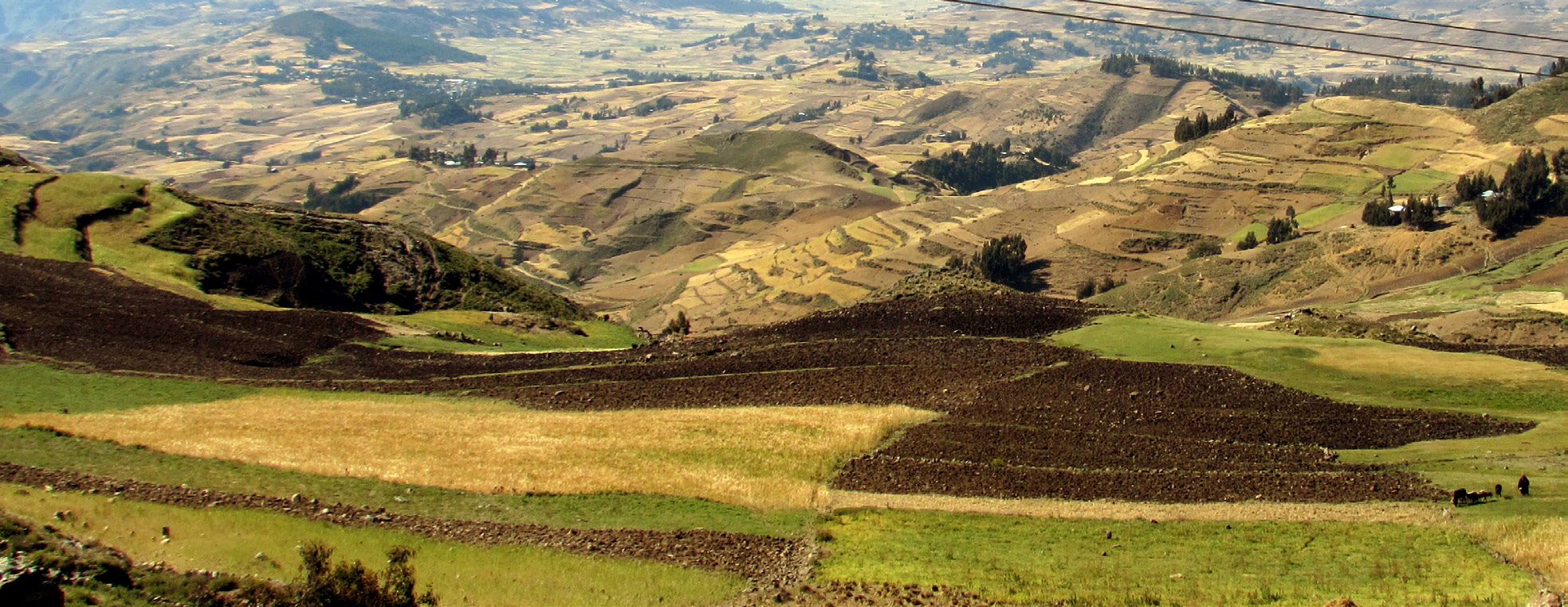
Land degradation is one of the most significant environmental and development challenges facing Nigeria and many countries across Sub-Saharan Africa. It adversely affects agricultural productivity, food security, water resources, biodiversity, and rural livelihoods. Rapid population growth, deforestation, overgrazing, bush burning, unsustainable farming practices, mining, urban expansion, and climate variability have accelerated the degradation of natural resources and reduced the capacity of landscapes to provide essential ecosystem services.
Over the past decades, extensive areas of forests, savannahs, wetlands, and natural ecosystems have been converted into agricultural land and settlements to meet increasing demands for food and economic development. Although this expansion has supported agricultural production, it has also resulted in severe soil erosion, declining soil fertility, desertification, gully erosion, biodiversity loss, reduced groundwater recharge, declining water quality, and increased vulnerability to droughts and floods. These challenges are particularly severe in Nigeria's rainfed farming systems across the northern savannahs, Middle Belt, and humid forest zones, where millions of smallholder farmers depend directly on natural resources for their livelihoods.
Degraded landscapes undermine agricultural productivity and contribute to poverty, food insecurity, malnutrition, unemployment, and climate vulnerability. Limited access to productive land and reliable water resources often forces rural households to diversify livelihoods through migration or off-farm employment, creating additional socio-economic pressures. Climate change further intensifies these challenges through rising temperatures, erratic rainfall, prolonged droughts in northern Nigeria, and frequent flooding across major river basins.
Agroecological and Landscape-Based Natural Resource Management (NRM) offers an integrated and sustainable approach to restoring degraded landscapes while improving agricultural productivity and ecosystem resilience. By combining soil and water conservation, watershed management, agroforestry, regenerative agriculture, biodiversity conservation, and climate-smart farming practices, degraded lands can be transformed into productive and resilient ecosystems. Scaling these approaches will strengthen food systems, improve rural incomes, enhance climate resilience, support Nigeria's commitments to the Great Green Wall Initiative, Land Degradation Neutrality (LDN) targets under the United Nations Convention to Combat Desertification (UNCCD), the National Agricultural Technology and Innovation Policy (NATIP 2022–2027), the National Climate Change Policy, and contribute to sustainable agricultural development and the achievement of the Sustainable Development Goals.
The program is designed for researchers, extension professionals, government officials, project managers, policy makers, NGO practitioners, development partners, university faculty, watershed and natural resource management specialists, and private-sector representatives involved in agroecology and nature-based solutions, landscape restoration, climate resilience, and sustainable rural development.
Objectives of the course:
Application:
Prospective applicants from Nigeria only are eligible to apply for the course on the website of using the link below:
https://forms.gle/Wj5SXDb6GnhYkT4z8v
Outlines of the course: (Themes covered during the course)
Coordinators
Dr Ramesh Singh
Global Research Program Director
Resilient Farming Systems
ICRISAT Focal Point for MFL Science Program
ICRISAT, Hyderabad, India
ramesh.singh@icrisat.org
Dr Kumaracharyulu Deevi
Senior Scientist, Transforming Agri-food Systems
ICRISAT Focal Point for CapSha Accelerator
ICRISAT, Hyderabad, India
kumaracharyulu.deevi@icrisat.org
Co-Coordinators
Dr Victor Afari-Sefa
Global Research Program Director
Transforming Agrifood Systems
ICRISAT, Kano, Nigeria
Victor.AfariSefa@icrisat.org
Dr Moses Shyam Davala
Scientist, Transforming Agri-food Systems
ICRISAT, Hyderabad, India
mosesshyam.davala@icrisat.org
Contact
Dr Padmaja Ravula
Theme Leader – Dryland Academy
Cluster Leader – Gender Equality and Youth Inclusion
Global Research Program – Transforming Agrifood Systems
ICRISAT, Hyderabad, India. padmaja.ravula@icrisat.org